
Evaluating VMware alternatives? Learn why dashboard-defined VMware Alternatives mask complexity while architecturally unified systems reduce it. Compare approaches.
Evaluating VMware alternatives? Learn why dashboard-defined VMware Alternatives mask complexity while architecturally unified systems reduce it. Compare approaches.

Artificial intelligence is now central to IT strategy, yet many organizations assume that meaningful progress requires new infrastructure. The assumption comes from the demands of AI workloads. They require substantial CPU and GPU power, high-throughput storage, and fast data movement.…
Most organizations planning their VMware Exit view it as a hypervisor replacement project. That narrow goal hides a larger opportunity: the chance to modernize data protection and recovery. The migration process highlights the failure of legacy disaster recovery strategies to…

83% of enterprise CIOs are now planning to bring workloads back on-premises—nearly doubling from 43% in late 2020. This dramatic shift toward cloud repatriation intersects perfectly with the current VMware migration crisis, creating an unprecedented opportunity for comprehensive infrastructure consolidation. The timing isn’t coincidental, and the economic case is compelling.
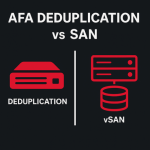
The transition from VMware requires careful consideration of deduplication and storage options. All-Flash Arrays (AFAs) excel in performance but are costly, while vSAN faces latency issues due to its complex architecture. Integrated ultraconverged systems like VergeOS eliminate trade-offs, improving efficiency and reducing costs by unifying deduplication with core hypervisor functions.

Understanding the AFA tax requires factoring in inflated hardware costs, complex licensing, and layered infrastructure. This article breaks down the economics behind all-flash arrays and shows how integrated platforms eliminate the tax without sacrificing performance or availability.

Many IT teams searching for a VMware alternative overlook networking costs. Proprietary switches, firewalls, and VPN appliances add unnecessary expenses. By integrating SDN into the hypervisor, organizations can eliminate licensing fees, reduce hardware costs, and simplify management—without sacrificing performance or security. Now is the time to rethink networking.

A storage refresh is often a costly and time-consuming process, forcing IT teams to evaluate, purchase, and migrate data every few years. The traditional approach of investing in dedicated storage arrays or single-vendor hyperconverged systems locks organizations into rigid, short-term…

Hyperconverged infrastructure (HCI) is often considered a VMware alternative, but its performance bottlenecks, scalability limits, and strict hardware requirements create challenges. This blog explores why HCI falls short and how VergeIO’s ultraconverged infrastructure (UCI) provides a more flexible, efficient path for VMware exits.
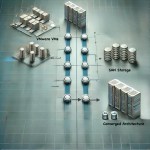
Explore how combining SAN replacement and VMware exit projects can reduce costs, simplify operations, and future-proof your IT


 StorageSwiss.com - The Home of Storage Switzerland