
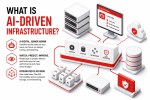
AI-Driven Infrastructure gives IT a digital junior admin that clears routine work and frees senior staff to design and scale, with the administrator always in control.
AI-Driven Infrastructure gives IT a digital junior admin that clears routine work and frees senior staff to design and scale, with the administrator always in control.
The VMware alternative near-future requirements go beyond reducing licensing costs. Organizations need a platform that supports future workloads while maximizing the value of existing infrastructure, letting new technology and existing hardware coexist and lowering refresh costs.
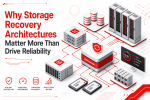
Drive reliability has stopped being the deciding factor in storage architecture. Recovery behavior during failure has taken its place. Parity-based systems force production workloads to compete with reconstruction for the same resources. Replication-based architectures preserve predictable performance during failure. Refurbished enterprise SSDs become viable inside recovery-aware platforms.
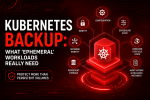
Developers describe containers as ephemeral. Infrastructure teams who carry that assumption into their Kubernetes backup strategy assume there is nothing to protect. The pod is disposable. The workload is not. Six layers of state live inside the Kubernetes API, survive every pod restart, and disappear entirely when the cluster fails.
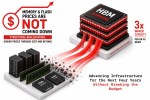
The memory market broke in 2025. DRAM contract prices rose 90 to 95 percent in Q1 2026, with another 58 to 63 percent projected for Q2. This is not a cyclical shortage. It is a structural reallocation of wafer capacity to HBM that will hold prices elevated through 2027. Storage architects need a new procurement playbook now.
Hypervisor deduplication has a storage efficiency problem that most buyers don’t discover until after deployment. For years, the overhead it creates was hiding in plain sight — organizations focused on RAM consumption, licensing costs, and hardware compatibility while storage overhead…
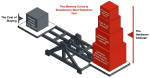
Broadcom didn’t create the memory crisis, but it may be its biggest beneficiary. Rising DDR5 and enterprise SSD prices have doubled server costs and stretched lead times to nearly a year — making the exit math work against organizations that need new hardware to make the switch.
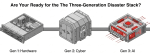
Rick Vanover of Veeam introduced a framework that reframes enterprise data protection: the three-generation disaster stack. Gen 1 is hardware failure, Gen 2 is ransomware, Gen 3 is AI agents corrupting production data. Each generation stacks on the last. Here is what it means for your VMware exit decision.
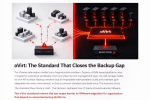
Every new hypervisor platform claims enterprise readiness. The oVirt API is how backup vendors verify that claim. The VMware alternative market has a fragmentation problem. Dozens of KVM-based platforms now compete for enterprise workloads. Each one ships its own management…
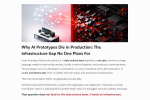
AI prototypes fail in production not from model or data problems, but from five infrastructure gaps that IT teams have solved for CPU workloads but not yet addressed for GPU-based AI. Learn what AI production infrastructure requires and how virtual data centers close the gap.


