
Only 35% of organizations meet their recovery target. The recovery time gap is not a backup product problem. Recovery fails on configuration, not data — and no backup product can fix what the architecture above it broke. Here is the structural fix.
Only 35% of organizations meet their recovery target. The recovery time gap is not a backup product problem. Recovery fails on configuration, not data — and no backup product can fix what the architecture above it broke. Here is the structural fix.
Every new hypervisor platform claims enterprise readiness. The oVirt API is how backup vendors verify that claim. The VMware alternative market has a fragmentation problem. Dozens of KVM-based platforms now compete for enterprise workloads. Each one ships its own management…
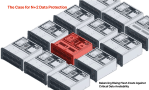
Rising flash costs tempt IT planners to reduce N+2 data availability to N+1. That logic is wrong. AI is driving both the price increases and the growing value of your data. The answer is not less protection. It is smarter protection through triple mirrors, repair servers, and commodity drives.

Understanding the AFA tax requires factoring in inflated hardware costs, complex licensing, and layered infrastructure. This article breaks down the economics behind all-flash arrays and shows how integrated platforms eliminate the tax without sacrificing performance or availability.

Repurposing existing hardware with the right infrastructure software improves IT operational efficiency by extending hardware life, reducing costs, and delivering near-bare-metal performance with high availability and resiliency.

Many IT professionals overly rely on backup software for data protection, which should be a secondary measure. Infrastructure software is crucial for ensuring data resiliency, uptime, and handling hardware failures. It provides proactive solutions like real-time snapshots and high availability, minimizing reliance on backup systems and enabling quicker recovery.

If object storage and the S3 API interests you, but you are holding back because of concerns about performance or security, Scality would like to introduce RING 6.0. Scality is advertising it as the first object storage system with enterprise…

Avere’s Ron Bianchini is the CEO on our MeetTheCEO podcast with Storage Swiss’ George Crump and Charlie Hodges. Ron discusses how Avere gives organizations the ability to put an end to the rising cost and complexity of data storage, the…

When IT professionals think of data protection, they think of protecting that data from accidental deletion or catastrophic loss from a disk array failure. The goal of the data protection process is to maintain access to data when these events…
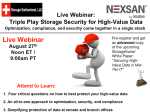
Optimization, compliance, and security come together in a single stack Today’s data-intensive organizations are struggling to confront the rising costs and risks resulting from global growth in information assets, difficulty in complying with new regulations, and the increasing threat of…


