Blog Archives

VMware Exit: Why DR Readiness Matters More Than the Hypervisor  

Most organizations planning their VMware Exit view it as a hypervisor replacement project. That narrow goal hides a larger opportunity: the chance to modernize data protection and recovery. The migration process highlights the failure of legacy disaster recovery strategies to

Tagged with: , , ,
Posted in Article, Blog

Reimagining VDI: The Impact of VMware Exit

A VMware exit presents an opportunity for IT leaders to reassess virtual desktop infrastructure (VDI) and infrastructure strategy as costs decrease and new compliance and security pressures arise. Embracing an infrastructure-wide consolidation can simplify operations, reduce costs, and enhance readiness for AI, transforming complex systems into a unified architecture.

Tagged with: , , , , , ,
Posted in Article, Blog

Why Cloud Repatriation is Critical Post-VMware Exit

83% of enterprise CIOs are now planning to bring workloads back on-premises—nearly doubling from 43% in late 2020. This dramatic shift toward cloud repatriation intersects perfectly with the current VMware migration crisis, creating an unprecedented opportunity for comprehensive infrastructure consolidation. The timing isn’t coincidental, and the economic case is compelling.

Tagged with: , , , , , ,
Posted in Article, Blog

Leveraging Hardware Diversity for Multi-Site IT Efficiency

Multi-site IT succeeds when hardware diversity meets software consistency—delivering flexibility, predictability, and simplicity across Edge, ROBO, Venues, and the core with VergeOS Virtual Data Centers.

Tagged with: , , , , ,
Posted in Article, Blog

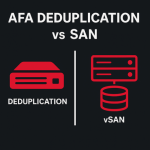
AFA Deduplication vs vSAN

The transition from VMware requires careful consideration of deduplication and storage options. All-Flash Arrays (AFAs) excel in performance but are costly, while vSAN faces latency issues due to its complex architecture. Integrated ultraconverged systems like VergeOS eliminate trade-offs, improving efficiency and reducing costs by unifying deduplication with core hypervisor functions.

Tagged with: , , , , , , , ,
Posted in Article, Blog

Rethinking ROBO and Edge

Enterprises with distributed operations are being compelled to reassess their ROBO and Edge strategies following Broadcom’s acquisition of VMware. Long-held assumptions about how to manage infrastructure at remote offices, branch offices (ROBO), and edge locations need to be reexamined. Beyond

Tagged with: , , , ,
Posted in Article, Blog

Understanding the AFA Tax

Understanding the AFA tax requires factoring in inflated hardware costs, complex licensing, and layered infrastructure. This article breaks down the economics behind all-flash arrays and shows how integrated platforms eliminate the tax without sacrificing performance or availability.

Tagged with: , , , , , ,
Posted in Article, Blog

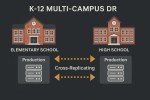
The Requirements of DR for K–12 IT

K–12 school districts need disaster recovery plans they can afford, test, and trust. This article outlines core DR requirements and why now is the right time to rethink your strategy.

Tagged with: ,
Posted in Article, Blog

The Infrastructure Modernization Problem

The Infrastructure Modernization Problem is rooted in ecosystem overload—years of fragmented, overly complex, and vendor-dependent IT infrastructure. IT managers today face challenges including disruptive virtualization vendor acquisitions, escalating public cloud costs, demanding AI infrastructure requirements, and persistent skills shortages. While

Posted in Article, Blog

Solving Shadow AI Risk

An effective enterprise AI strategy must address the risks of Shadow AI, where employees use unauthorized AI tools. With 46-50% of employees engaging with these tools, organizations should avoid complete bans and consider partnerships with specialized cloud providers, on-premises solutions, or hybrid approaches to ensure productivity while safeguarding security and compliance.

Tagged with: , , , ,
Posted in Article, Blog