

All-flash arrays are known for IOPS and low latency. But there is another feature of flash that may end up being even more important than performance; density. All-flash array vendors are beginning to deliver PBs of capacity in a few…
All-flash arrays are known for IOPS and low latency. But there is another feature of flash that may end up being even more important than performance; density. All-flash array vendors are beginning to deliver PBs of capacity in a few…

There is no doubt that all-flash arrays are fast. In fact, for many data centers the performance of an entry level all-flash array provides more IOPS performance than they will ever need. But the reality is most data centers are…
When trying to measure storage performance, IT professionals often concentrate on IOPS. But IOPS may be the least valuable performance measurement statistic available. Most data centers can’t generate enough consistent IOPS for them to be a relevant way to compare…
Object storage systems store objects and file systems store files. While an object and a file are typically the same thing, how they are stored is not the same; it is the difference between an object storage system and a…
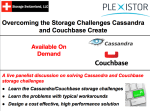
NoSQL databases like Cassandra and Couchbase are quickly becoming key components of the modern IT infrastructure. But this modernization creates new challenges – especially for storage. Storage in the broad sense. In-memory databases perform well when there is enough memory…

Crossbar Briefing Note Non-Volatile Memory (NVM) is the nirvana of the memory and storage market. It provides most of the speed and durability of RAM but the persistence of flash. The combination should drive both in-memory computing initiatives and high…
Couchbase and Cassandra count on the active data set to be in RAM. To overcome the RAM limits of a single server and to make more compute available, the environments run in a cluster that aggregates the RAM and CPU…

NoSQL databases like Cassandra and Couchbase are quickly becoming key components of the modern IT infrastructure. However this modernization creates new challenges – especially for storage. These modern applications all count on DRAM memory to deliver rapid results to user…
NoSQL databases like Cassandra and Couchbase are quickly becoming key components of the modern IT infrastructure. But this modernization creates new challenges – especially for storage. Storage in the broad sense. In-memory databases perform well when there is enough memory…

When IT professionals begin investigating all-flash arrays they are often drawn to the IOPS benchmark that almost every vendor uses to boast about system performance. The reality is that IOPS, while it may have some value, should be just one…


 StorageSwiss.com - The Home of Storage Switzerland