Only 35% of organizations meet their recovery target. The recovery time gap is not a backup product problem. Recovery fails on configuration, not data — and no backup product can fix what the architecture above it broke. Here is the structural fix.
Rick Vanover of Veeam introduced a framework that reframes enterprise data protection: the three-generation disaster stack. Gen 1 is hardware failure, Gen 2 is ransomware, Gen 3 is AI agents corrupting production data. Each generation stacks on the last. Here is what it means for your VMware exit decision.
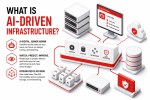
AI prototypes fail in production not from model or data problems, but from five infrastructure gaps that IT teams have solved for CPU workloads but not yet addressed for GPU-based AI. Learn what AI production infrastructure requires and how virtual data centers close the gap.
Rising DRAM, NAND, and server costs are forcing a shift in how organizations build and maintain IT infrastructure. Five words will define the next five years: rescue, reuse, repurpose, recondition, and redundancy.
Rising flash costs tempt IT planners to reduce N+2 data availability to N+1. That logic is wrong. AI is driving both the price increases and the growing value of your data. The answer is not less protection. It is smarter protection through triple mirrors, repair servers, and commodity drives.