Blog Archives

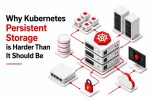
Why Kubernetes Persistent Storage is Harder Than It Should Be

Kubernetes persistent storage is not a provisioning problem. It is an architectural coordination problem. CSI standardized how storage plugs into Kubernetes but did not eliminate operational fragmentation between the storage system, snapshot tool, backup product, and DR layer. The fix is structural. Collapsing storage, virtualization, and Kubernetes integration into one control plane removes the integration tax assembled architectures keep paying.


Tagged with: , , ,
Posted in Article, Blog

Maximizing ROI in Infrastructure Automation

Infrastructure automation ROI disappoints when organizations spend more time maintaining automation than they save through it. Hardware refresh cycles, storage updates, and network changes force constant code rewrites on fragmented infrastructure. Unified infrastructure platforms eliminate the maintenance burden by leveraging architectural abstraction, preserving automation investments across hardware generations.

Tagged with: , , , , , ,
Posted in Article, Blog

Kasten Data Protection and Mobility for Stateful Kubernetes

Serving Enterprise Data Management for Production Container Environments at Scale Containers have a role in enterprise data centers beyond their initial concentration in DevOps use cases. In order to support production workloads such as relational databases, the container environment must

Tagged with: , , , , , , , ,
Posted in Briefing Note

Cut Costs, Increase Quality and Accelerate Delivery of New Applications – IBM InfoSphere Virtual Data Pipeline

Application development is quickly changing from the old waterfall approach where applications were delivered once a year and all at once, to a more continuous development method where applications are delivered more frequently with more incremental changes between releases. The

Tagged with: , , , , , , , ,
Posted in Briefing Note

Bringing Copy Data Management as a Service to Enterprises – Actifio GO SaaS Briefing Note

There is no doubt that production data is growing, but copy data is growing even faster. More data must be backed up as the stricter compliance landscape creates more comprehensive retention requirements, and copy data is being used to serve

Tagged with: , , , , , , , , , , , , , , ,
Posted in Briefing Note

5 Key Trends that Could Challenge Your Data Protection Plan in 2018

The goal of data protection is to protect the organization from outages. The scope of these outages can impact an application, a server, a storage system or an entire data center. IT faces the challenge of restoring the most recent

Tagged with: , , , , , , , , ,
Posted in Article

SlideShare: 5 Key Trends That Could Challenge Your Data Protection Plan in 2018

And how to counter them Organizations are facing increasing businesses continuity and resiliency challenges in 2018. Much of these pressures – such as security threats, an increase in the number of mission critical applications, and data shifting to the cloud

Tagged with: , , , , , ,
Posted in Slideshare

StorageShort: Is Your Backup Hybrid IT Ready?

Organizations looking to adopt a Hybrid IT strategy are facing new challenges when it comes to protecting these environments. The single biggest challenge is that the application and its data can be on-premises or in the cloud without the data

Tagged with: , , , , , ,
Posted in StorageShort

Meeting the Core Principles of Data Protection

As the data center modernizes, new initiatives and trends are impacting the data protection process. In our webinar, “5 Key Trends that Could Challenge Your Data Protection Plan in 2018,” we discuss how things like Hybrid IT, Ransomware, application explosion,

Tagged with: , , , , , , ,
Posted in Blog

Enter your email address to follow this blog and receive notifications of new posts by email.

Join 17.4K other subscribers
Blog Stats
  • 2,016,635 views