
Most organizations have very low confidence in their ability to consistently recover data, whether from a minor outage or a major disaster. They’ve been through too many instances where data could not be recovered, took too long to be recovered,…
Most organizations have very low confidence in their ability to consistently recover data, whether from a minor outage or a major disaster. They’ve been through too many instances where data could not be recovered, took too long to be recovered,…
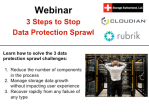
Most enterprises have little confidence in their ability to recover data in the event of a data center failure, storage failure, ransomware attack, or natural disaster. There is too much data to protect and user expectations of rapid recovery are…

Object storage is an excellent secondary tier of storage. It can drive down the cost of storage, improve the quality of data retention and ensure that data is safe in the event of a disaster. Unlike other forms of storage,…

An organization’s backup storage target options have changed from simple tape to an almost bewildering number of options such as fully integrated backup appliances, secondary storage systems, cloud storage, object storage and various other software defined storage (SDS) systems. An…

Backup appliances do one thing well, store backup data. Object storage systems, as we’ve shown, can also fulfill this role. But unlike typical backup appliance they can do so much more. As a backup target, object storage systems provide an…
Object storage is not only perfect for backups – it seems designed for it. It’s safe, economical, and scalable – everything backup storage needs to be. Specific features in object storage make it perfectly suitable for the task of holding…

Eventually most organizations will run out of backup storage, so understanding how backup storage scales is critical to creating a long term data protection strategy. It is not as simple as just converting to a scale-out architecture because deduplication adds…

Hardware-based deduplication legitimized the concept of backing up to disk. But deduplication alone is no longer as important as it used to be. The problem with hardware-based duplication is the data must be transferred to the backup appliance prior to…

Organizations need to backup their data, but if you view backup as a one-size-fits-all job, where all data is treated equally, you’re missing an opportunity for substantial cost savings. Ideally, you could tier storage and create an “active archive” that…

Saturday Night Live (SNL) veteran Matt Yonks spoke about the show’s archival challenges at a special event hosted by Cloudian at the National Association of Broadcasters (NAB). Matt has been with SNL for 19 years and is their Post Production…


 StorageSwiss.com - The Home of Storage Switzerland