Blog Archives

SlideShare: What’s Your Path to NVMe?

NVMe and NVMe over fabrics promises to change the flash and networking industry. NVMe enables storage systems to tap into the full potential of flash storage and NVMe allows those systems to deliver in-server latencies. NVMe will fundamentally change storage.

Tagged with: , , , , , , , , ,
Posted in Slideshare

How to Consolidate the Four P’s of Data

The Four P’s of data are performance, protection, preservation and price. IT needs to ensure that each data set receives the right amount of the first three Ps and the right cost for the last one. The problem is the

Tagged with: , , , , , , , , ,
Posted in Blog

Building Smarter, Simpler Storage Networks – Cisco Storage Networking Briefing Note

Storage architectures are becoming increasingly more complicated. There is more data coming from more applications. There are more users and developers. And there are more operational challenges as IT tries to maximize flash performance across multiple protocols. The storage network

Tagged with: , , , , , , , ,
Posted in Briefing Note

StorageShort: How to Overcome the Fear of File Deletion

The statistic that 85% of data in most data centers has not been accessed in the last year is often cited, and for the most part it is very accurate. Organizations create more data than ever and retain that information

Tagged with: , , , , , , , , ,
Posted in StorageShort

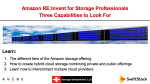
Webinar: Amazon RE:Invent for Storage Professionals – Three Capabilities to Look For

The sixth year of Amazon RE:Invent is almost upon us (November 27 to December 1 in Las Vegas). In this webinar listen to Storage Switzerland, Avere Systems and SwiftStack for a storage professional’s guide to the event. Learn about: The

Tagged with: , , , , , , , ,
Posted in Webinar

A File System in the Cloud vs. A Cloud File System

There are two types of cloud based file systems. One is designed to extend cloud storage into the organization. The other is designed to allow organizations to run applications in the cloud but use more traditional file protocols like NFS

Tagged with: , , , , , , , , , , , ,
Posted in Blog

What is the Two Tier Data Center?

Most data centers have at least five to six different storage systems from different vendors, increasing storage costs and management complexity. One potential solution is the all-flash data center, where all data is moved to a single all-flash array. While

Tagged with: , , , , , , , , ,
Posted in Blog

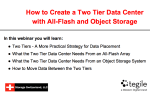
Webinar: How to Create A Two Tier Enterprise With All-Flash and Object Storage

The only problem with the all-flash data center is most of the data (as much as 85%) organizations store is not accessed in more than a year. Assuming there is a more cost effective way to store that data it

Tagged with: , , , , , , ,
Posted in Webinar

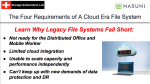
SlideShare: The Four Requirements of a Cloud-Era File System

File systems are the heart of most organizations. They’re how critical unstructured data assets are stored, organized, and shared. But with files exploding in size and quantity as well as the cloud offering potentially cheaper and more scalable storage than

Tagged with: , , , , , , , , ,
Posted in Slideshare

Do All-Flash Arrays Have A Failure Domain Problem?

The capacity of all-flash arrays has been on the rise for several years. Many vendors are now claiming petabytes (PB) of capacity in just a few rack units. While these arrays promise to dramatically reduce the footprint of the data

Tagged with: , , , , , , , , ,
Posted in Blog