Blog Archives

Easing Amazon EBS Snapshot Pain, for Free

It’s a major pain to manage snapshots in Amazon Web Services Elastic Block Storage (AWS EBS). It’s essentially a single command line with very limited capabilities. The result is that developers writing applications for AWS find themselves building tools to

Tagged with: , , , ,
Posted in Blog

EMC World 2016 – EMC’s All-Flash Unity

EMC chose their annual user conference, EMC World 2016 as EMC’s coming out party for a new storage offering: Unity. While all the marketing around Unity focuses on an $18,000 all-flash configuration it is a hybrid solution available in hard

Tagged with: , , , , , ,
Posted in Blog

EMC World 2016 – EMC Really is a Software Company

Storage hardware vendors like to refer to themselves as software companies. While it is true that most of them write storage software that runs on off-the-shelf hardware, most of them require that you buy their hardware to get their storage

Tagged with: , , , , , ,
Posted in Blog

NAS vs. Object: Supporting Next Apps

Today’s apps aren’t your father’s apps. Applications developed today take for granted things that were not even thinkable not that long ago — especially in the storage space. The scale that is needed by modern day applications was never envisioned

Tagged with: , , , , , , ,
Posted in Blog

NAS vs. Object: HA w/o the headaches

Some systems are born with high availability, others have it thrust upon them. This seems to be the case when discussing the High Availability (HA) features of traditional NAS systems vs those of object storage systems. HA refers to the

Tagged with: , , , , ,
Posted in Blog

NAS vs. Object: Performance – Thinly Provisioned NAS

Network Attached Storage (NAS) filers were originally designed to be a central repository that provides fast access to frequently changing files on primary storage. NAS also makes it simple to add more storage capacity over existing Ethernet networks. However, the

Tagged with: , , , , , , ,
Posted in Blog

What Exactly is Software Defined Storage?

Software-Defined Storage (SDS) separates the storage software from the storage hardware. The result should be a model that allows organizations to buy storage hardware systems from multiple vendors that address specific use cases but have the ability to operate, not

Tagged with: , , , , , ,
Posted in Blog

NAS vs. Object: Protecting High File Count Systems

The modern data center today is faced with storing, managing and protecting an ever-increasing torrent of data, most of which needs to be stored for indefinite periods of time due to various government rules, regulations and laws. File counts have

Tagged with: , , , , , , , , ,
Posted in Blog

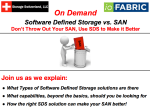
Does SDS Kill the SAN?

Software Defined Storage promises adventurous IT professionals increased flexibility and potentially easier management of storage resources. And in many cases SDS delivers on that promise. But what about the legacy storage hardware and software already in the data center? Do

Tagged with: , , , ,
Posted in Blog