
The data center is a series of networks. There are networks that connect servers to users and networks that connect storage to servers. Even within servers and storage there are networks to connect CPU to IO devices like flash drives…
The data center is a series of networks. There are networks that connect servers to users and networks that connect storage to servers. Even within servers and storage there are networks to connect CPU to IO devices like flash drives…

Potentially the only technology pronounced dead more often than Fibre Channel is tape, yet both are alive and well. In 2018, the Fibre Channel (FC) market saw a return to growth. According to Dell’Oro Group, FC SAN port shipments were…

Several NVMe flash vendors are claiming that NVMe Flash has reached price parity with Serial Attached SCSI (SAS) based flash. The claim is true or pretty close to true in most situations. Vendors are selling their NVMe flash drives for…

Modern workloads such as Hadoop, Kafka and machine learning are demanding in terms of the volume of data that must be processed, the speed at which that data much be processed, and the fact that their capacity and performance requirements…

Against the backdrop of Moore’s Law and ultra-low latency non-volatile memory express (NVMe) solid state drives, network speed and total capacity are increasingly the levers that make or break an application’s performance. Fibre Channel (FC) storage networking may be frequently…

Hyperconverged Infrastructure (HCI) consolidates several data center components into a single architecture with the promise of simplifying management and enabling better scale to meet the demands of the organization. Of these components, two of the most important are the hypervisor…
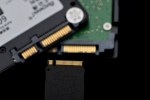
It is easy to get caught up in the maximum performance potential of solid-state drives (SSDs), especially as we move into the era of non-volatile memory express (NVMe) access protocols. However, in reality, applications and service level agreements (SLAs) cannot…

When migrating to new technology, it is always important to conduct a careful cost/benefit analysis, to understand what the return on the new investment will be. It is also necessary to be sure that the investment will provide desired outcomes…

NVMe (Non-Volatile Memory Express) flash drives thrust storage media from the position of the worst performing component of the data center to the best. The technology’s low latency however, exposes other bottlenecks that went previously undetected. The new storage performance…
ScaleFlux Briefing Note Data-driven, processing-intensive workloads like database processing, artificial intelligence (AI) and machine learning (ML), and content delivery networks (CDN) require new levels of storage performance, which today is coming to mean deployment on a non-volatile memory express (NVMe)…


 StorageSwiss.com - The Home of Storage Switzerland