

NVMe is a storage protocol designed specifically for flash-based storage. It is PCIe-based and provides more commands per IO queue and more IO queues. The NVMe over Fabrics (NVMe-F) extension gives IP and Fibre Channel (FC) networks the ability to…
NVMe is a storage protocol designed specifically for flash-based storage. It is PCIe-based and provides more commands per IO queue and more IO queues. The NVMe over Fabrics (NVMe-F) extension gives IP and Fibre Channel (FC) networks the ability to…
One of the most expensive aspects of data protection is the cost of the storage that holds all of the copies of data. Backup storage capacity can be 10X or more the capacity of primary storage. Backup storage has a…

Data protection has changed. Most data centers are heavily virtualized, and are using more than just VMware as their hypervisor. Organizations are also well down the path of moving workloads to the cloud, most notably into Amazon EC2. Expectations of…

Storage architects have the responsibility to place workloads properly on the right storage tier. Workload placement requires a careful balance between the correct level of performance and the right price. The problem is these architects do not have the tools…

As member countries turn the European Union’s General Data Protection Regulation (GDPR) into domestic law, vendor’s are focusing on secondary storage, backup, archive and disaster recovery. But what about primary storage? Is it possible to architect a primary storage system…

A “great” DR plan is one that addresses one of the biggest concerns that organizations have over the disaster recovery process. “Will it work?” Getting a copy of data to the cloud is the beginning of a great DR plan…
Disaster Recovery, at its most basic, is making a copy of data and securing that copy off-site. Unfortunately, it is details like how long can the organization afford to be without the application and how much data can the organization…
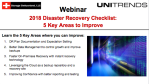
Almost every recent survey done on the state of backup indicates a very low level of confidence in an organization’s ability to recover in the event of a disaster. There are three reasons for this result. First, the management may…
Most enterprises have not virtualized their data center; they have virtualized their data centers (plural). The software most organizations choose as their virtual foundation is VMware. Protecting a multi-site VMware environment has unique challenges that IT needs to address. Three…

Disaster Recovery as a Service (DRaaS), the ability to outsource an organization’s recovery site, typically to the cloud, is rapidly gaining in popularity. The executive team may assume the solution can do no wrong and encourage IT professionals to pursue…


 StorageSwiss.com - The Home of Storage Switzerland