

In our webinar, “Overcoming the RoadBlocks to the All-Flash Data Center”, one of the questions that came up is how to integrate an All-Flash Array into the data center. It’s not our position that you should throw out all your…
In our webinar, “Overcoming the RoadBlocks to the All-Flash Data Center”, one of the questions that came up is how to integrate an All-Flash Array into the data center. It’s not our position that you should throw out all your…

SQL Databases of almost any size should be a top consideration for SSD integration. Because of the granularity of the database structure small components of the database can be moved to SSD, reducing the overall SSD investment. In this article, Storage Switzerland’s Lead Analyst, George Crump discusses how to determine which of those componets should be on SSD. This report will show that a surprisingly small amount of SSD can provide a cost effective, more scaleable, higher performing database for the entire environment.
Learn:
Which Storage Statistics Can Help You Determine SQL SSD Readiness
Which component of your SQL environment should be on SSD
The ROI of SSD Investment for SQL Environments
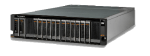
Texas Memory Systems was a personal favorite of mine so I had concerns when IBM acquired them in August of 2012. With cautious optimism, I’ve been watching IBM to see what they did with their savvy investment. The first step…

As we start 2014, storage is changing. The familiar dual controller, scale up architecture is potentially being replaced by a new set of architectures. Storage professionals now have to consider storage systems that can scale out or converge themselves with…

At Storage Switzerland we have been covering the move to memory channel storage for the last six months. It is the next logical upgrade from drive-attached and PCIe-attached flash storage. By putting the flash directly on the memory bus traditional…

Flash storage continues to be the “go to” option for IT professionals looking to solve performance problems, but these infrastructure designers are struggling with how to best implement flash. Automated tiering and caching are becoming common answers to that question.…
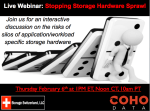
Storage in the data center has evolved from islands of server attached storage to shared networked storage. But in both cases storage needed to be specifically designed for the workload it was on. Even in the so-called shared storage environment,…

Using flash based solid state disk drives (SSDs) installed in a server as cache is probably the most popular way for IT professionals to address performance problems. Most caching solutions are read-only caches, however, meaning that the other half of…

IT professionals wear many hats and are constantly responding to the emergency of the moment. When performance problems appear in the virtual environment the default reaction is to throw hardware at the problem. That means “throwing” premium priced flash SSD at it. But this approach can lead to buying too much or too little SSD, which either wastes money or doesn’t effectively solve the performance problem. In this article Storage Switzerland’s lead analyst George Crump, leads you through the process of qualifying your virtual environment’s SSD suitability.


 StorageSwiss.com - The Home of Storage Switzerland