
Hybrid storage had its chance a decade ago, and most IT teams remember how it ended. Arrays that paired a layer of flash with a shelf of hard drives promised flash performance at disk prices, and for many workloads they delivered. The trouble showed up on the days they did not. A caching algorithm guessed wrong, a busy volume fell back to spinning disk, and users called the help desk before anyone in IT knew why. All-flash arrays made that problem go away, and falling flash prices made all-flash cheap enough that nobody asked the question again.
Key Takeaways
- Hybrid storage failed when an algorithm inside the array controller made placement decisions the IT team had no way to see or override.
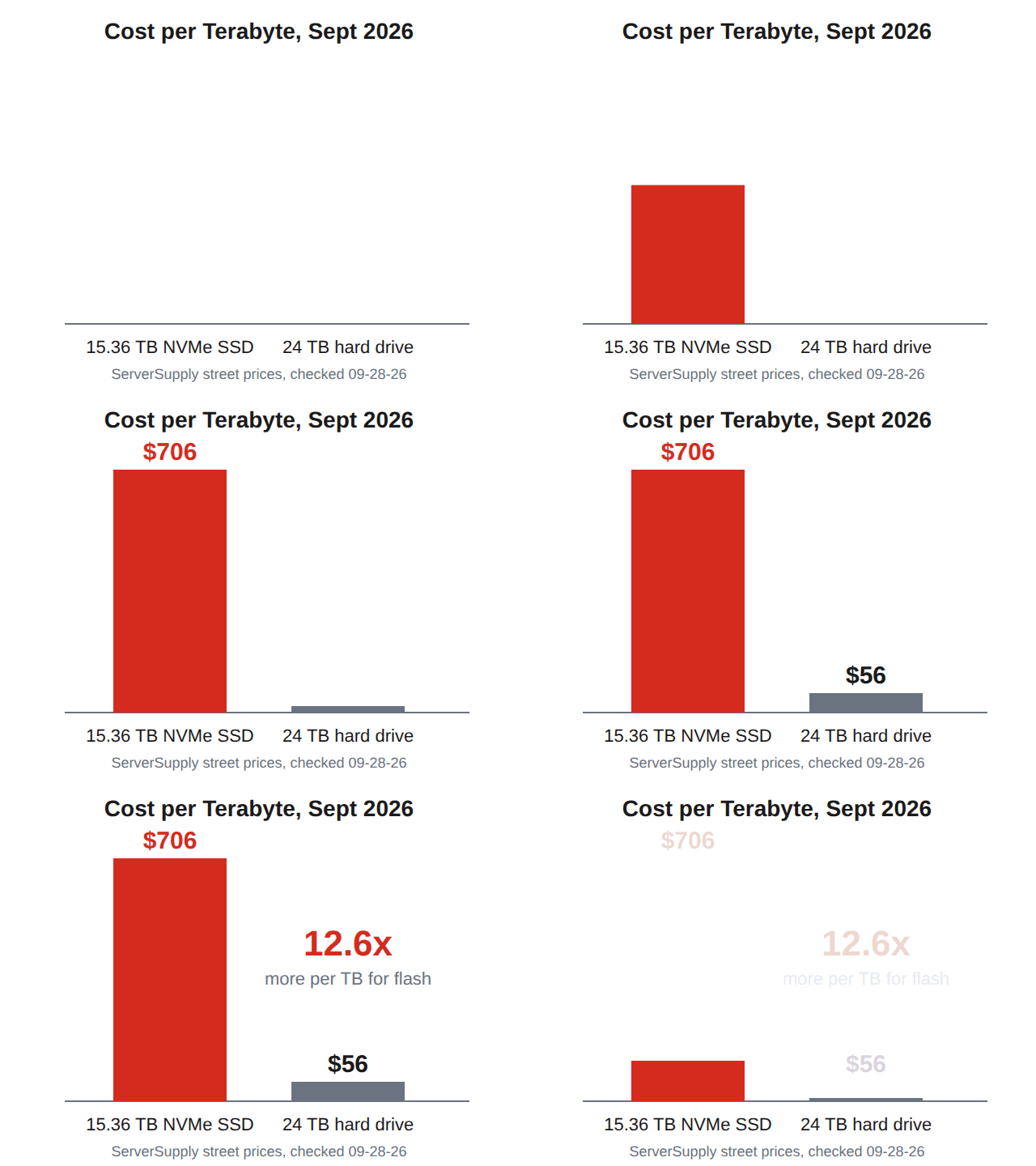
- Flash now costs 12 to 14 times more per terabyte than a 24 TB hard drive, which reopens the hybrid question.
- Tiering that runs inside the infrastructure software puts the cache next to the VM and gives the IT team control over where each workload lives.
Key Terms
Hybrid storage
A storage system that combines flash and hard drives and places data on one or the other based on performance needs.
Automated tiering
Software that moves data between flash and hard drives on a schedule, based on sampled access patterns.
Cache miss
A read the flash or RAM cache cannot serve, which falls through to the slower media underneath.
Preferred tier
A per-drive setting that tells the platform which tier should hold a VM disk’s data.
Why Hybrid Storage Lost the First Round
First-generation hybrid arrays used flash in one of two ways. Some placed it in front of the hard drives as a cache and let an algorithm decide which blocks stayed there. Others moved chunks of a volume between flash and disk on a schedule, often once a day, based on how often those chunks had been read. Both worked for steady workloads and struggled with anything that changed.
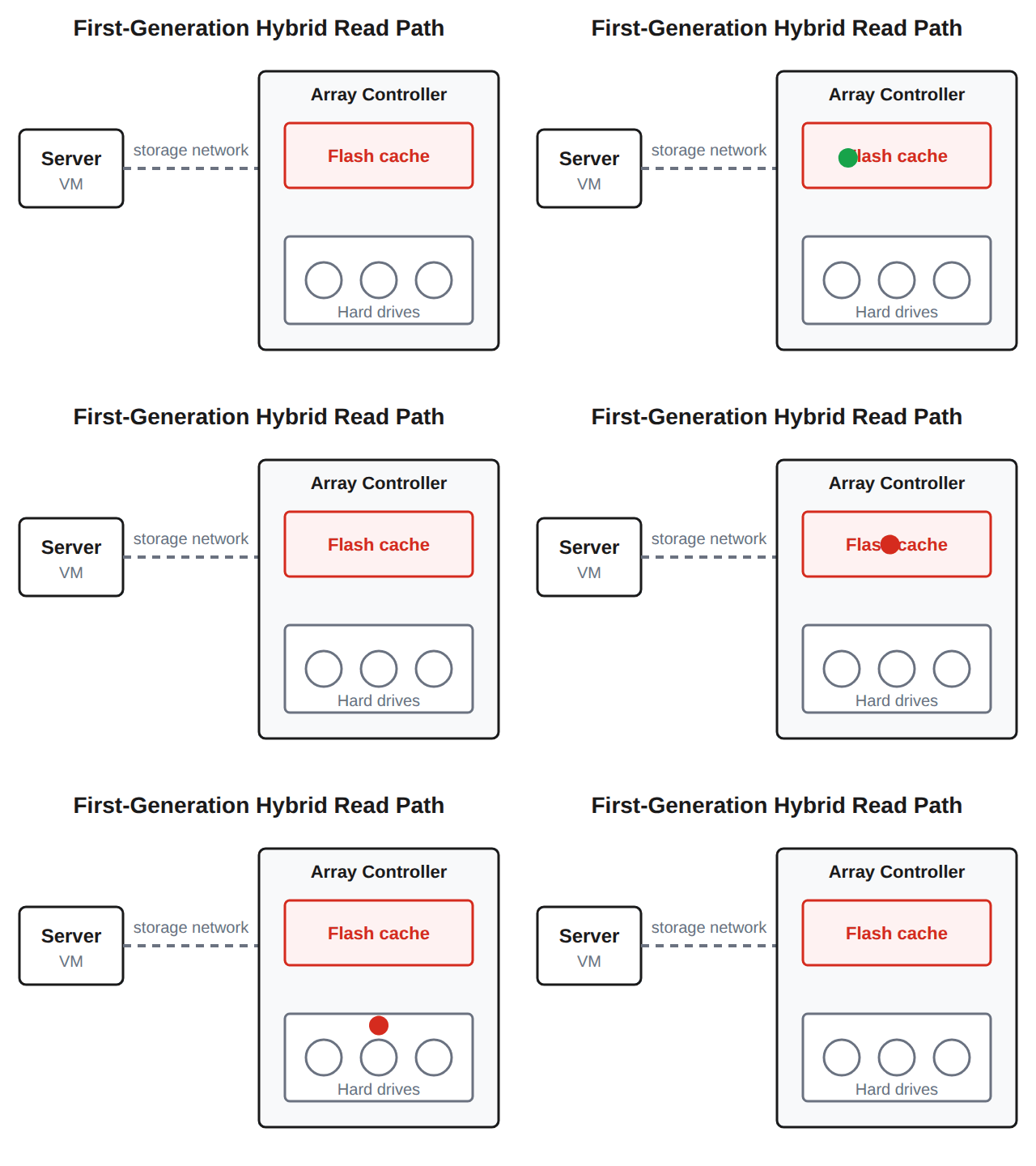
The IT team had almost no say in any of this. Pinning a volume to flash was often a premium feature or a support call, and the people who knew the business calendar watched an algorithm guess at it. Once flash got cheap enough, all-flash removed the guesswork by removing the choice.
Flash Prices Reopened the Hybrid Storage Question
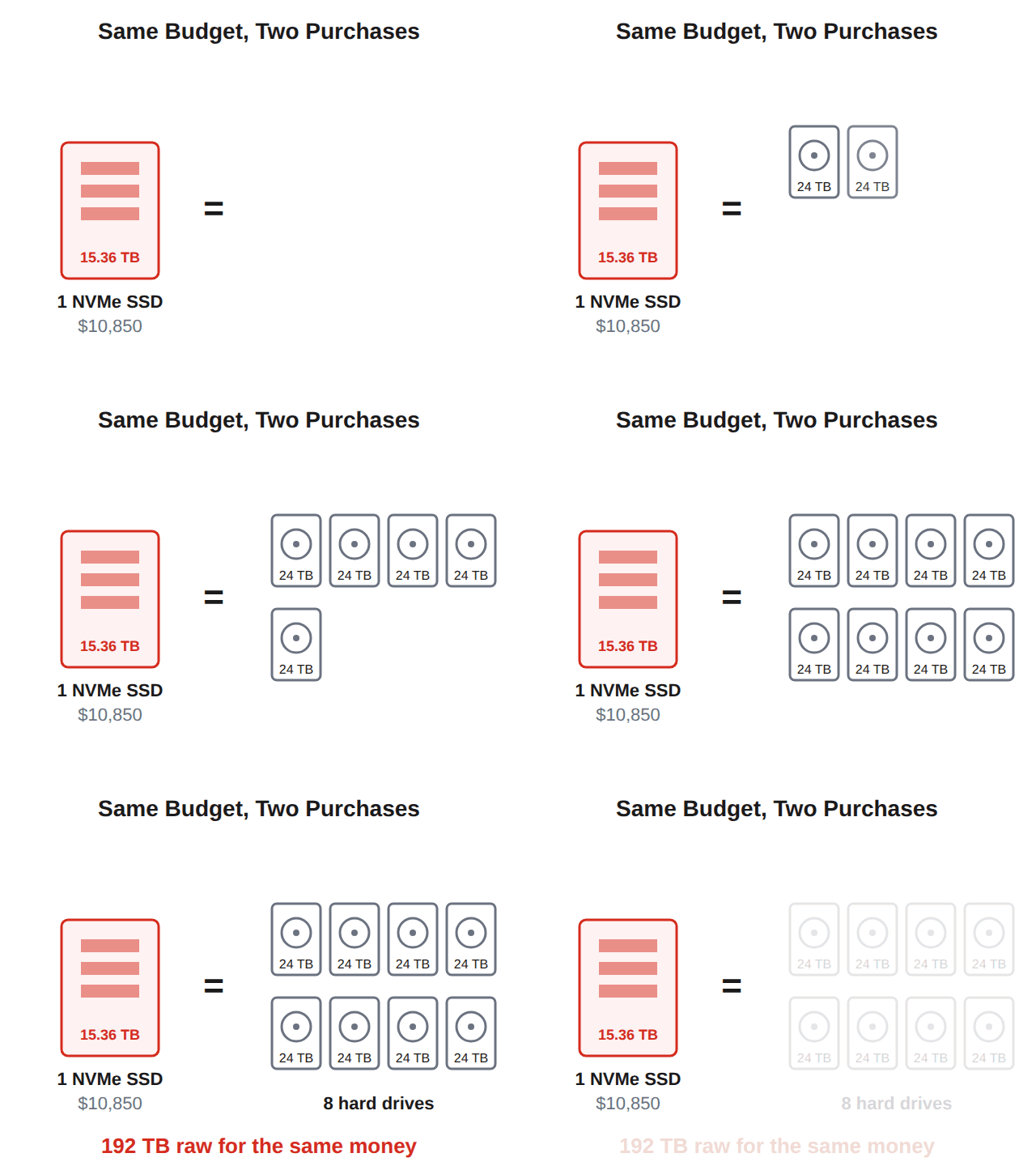
All-flash won on cost trends as much as on performance, since every refresh bought more flash for less money. HCI vendors made it the default, and most HCI clusters sold today are all-flash by design.
What Changes When Tiering Runs Inside the Infrastructure Software
The first round of hybrid storage failed on two counts, where the intelligence lived and who controlled it. An HCI platform that runs storage in the same software as compute and networking changes both.
The Cache Moves Next to the Workload
When storage shares a code base with the hypervisor, the platform can cache data in RAM on the server running the VM, and reads that hit that cache never cross the network. VergeOS takes this approach, and VergeIO testing shows four to five times the cache hit rate of array-side caching. Global inline deduplication across every tier leaves fewer unique blocks, so more of the working set fits in cache to begin with.
Hard Drives Get Code Written for Them
An integrated platform can also treat flash and spinning disk as different media with different I/O paths. VergeOS reorders and groups incoming writes into sequential runs before they reach the platter. It also detects sequential reads and prefetches the next blocks in parallel from drives across the cluster into the RAM cache. Hard drives do their best work on large sequential I/O, and this design feeds them more of it.
The IT Team Makes the Placement Call
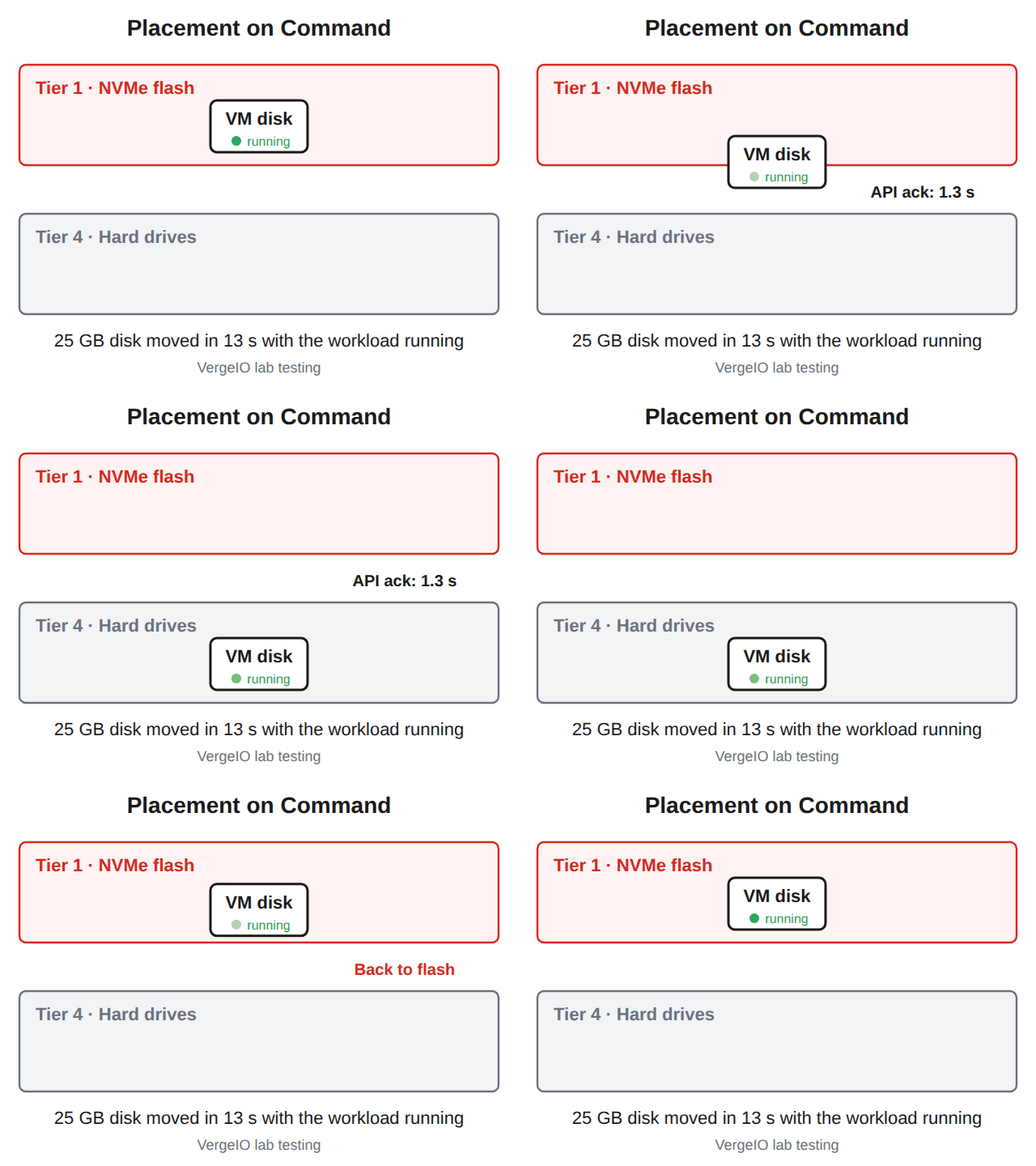
A tax application that is write-heavy through April 15 and read-heavy on April 16 needs no algorithm to predict the shift, since the IT team already knows the date. A workload moved to hard drives that draws a complaint two weeks later goes back to flash in seconds, and nobody goes down. I made the longer case for operator control in Storage Tiering Is Not the Problem. Losing Control of It Is.
Where Flash Still Belongs
Random-I/O databases with working sets larger than memory still belong on flash, pinned there by policy. Large hard drives also raise a fair question about exposure during a rebuild, which is why snapshots and repair mechanisms matter as much as the tiering itself. VergeOS protects the hard drive tier with frequent snapshots and with ioGuardian, which pulls missing blocks from a synchronized remote VergeOS system after a failure that exceeds the cluster’s redundancy.
Will Hybrid Storage Fail Again?
It will if it repeats the first design, an algorithm behind a storage network guessing at workloads it cannot see. Hybrid storage built into the infrastructure software, with the cache beside the VM and the IT team deciding placement, is a different system that happens to use the same two types of media. Dave Vincent and I will show how it works live on Wednesday, October 7, at 2:00 PM ET, moving a running VM from flash to hard drives and back, in How to use HCI and Hard Drives to Fight Data Center Inflation.
Live Webinar · Wednesday, October 7 · 2:00 PM ET
Register for How to use HCI and Hard Drives to Fight Data Center InflationFrequently Asked Questions
Why did hybrid storage arrays fall out of favor?
Caching and tiering algorithms inside the array controller made placement decisions IT had no way to see or control, and cache misses sent busy data to hard drive latency at unpredictable moments. Falling flash prices made all-flash the simpler fix.
Is hybrid storage cheaper than all-flash today?
At September 2026 street prices, a 15.36 TB NVMe SSD costs about $706 per terabyte and a 24 TB hard drive costs about $56, so every terabyte of idle data moved to hard drives saves roughly $650 in raw media.
Which workloads should stay on flash?
Random-I/O databases whose working sets exceed memory, along with transaction logs and other latency-sensitive scratch space. Pin those to a flash tier and place the rest on hard drives.

George Crump is the Chief Marketing Officer at VergeIO, the leader in Ultraconverged Infrastructure. Prior to VergeIO he was Chief Product Strategist at StorONE. Before assuming roles with innovative technology vendors, George spent almost 14 years as the founder and lead analyst at Storage Switzerland. In his spare time, he continues to write blogs on Storage Switzerland to educate IT professionals on all aspects of data center storage. He is the primary contributor to Storage Switzerland and is a heavily sought-after public speaker. With over 30 years of experience designing storage solutions for data centers across the US, he has seen the birth of such technologies as RAID, NAS, SAN, Virtualization, Cloud, and Enterprise Flash. Before founding Storage Switzerland, he was CTO at one of the nation's largest storage integrators, where he was in charge of technology testing, integration, and product selection.


Leave a comment