Blog Archives

What’s the Next Big Thing in Storage After Flash?

Flash storage is fundamentally changing the data center. It is allowing databases to meet the demands of users and virtual infrastructures to achieve new levels of virtual machine (VM) density. But what comes next after flash? Is it another advancement

Tagged with: , , , , , ,
Posted in Blog

The Road to Data Mobility – Consolidation, Storage Virtualization or Data Virtualization?

Storage consolidation is a lost cause. Why? The reason is that both the storage hardware and the use cases for that hardware are too different from each other. I outlined the problems in detail in my blog The Need for

Tagged with: , , , , ,
Posted in Blog

The Need for Storage Fragmentation

Here is the goal: Having a data center that consolidates all data onto a single storage system from one vendor. The hope is that by consolidating to a single system, the organization will reduce management headaches that IT administrators face

Tagged with: , , , , , , , , , ,
Posted in Blog

SlideShare: VMware – Flash-as-a-Service – How to achieve Flash Performance with Cloud Economics

Organizations relying on VMware are ready to move beyond basic service consolidation. They want to establish a private cloud if they offer IT “as-a-service.” The challenge for data centers is how do they solve the problem of providing high performance

Tagged with: , , , , , ,
Posted in Slideshare

Hyperconvergence and the Cloud – Getting There is half the battle

Sureline Systems’ Briefing Note Hyperconvergence and the cloud make similar claims to lure IT professionals to their products and services. Both solutions claim to simplify IT and eliminate the need for technology refreshes. For the most part these claims are

Tagged with: , , , , , ,
Posted in Briefing Note

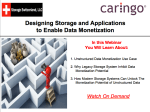
SlideShare: Designing Storage and Apps to Enable Data Monetization

The old ways of managing unstructured data through file servers and network attached storage (NAS) systems were basically “store and forget” architectures. Today, unstructured data is more intertwined to the actual application. Unstructured data is often monetized, has financial value

Tagged with: , , , ,
Posted in Slideshare

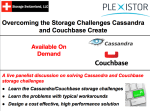
Webinar: Overcoming the Storage Challenges Cassandra and Couchbase Create

NoSQL databases like Cassandra and Couchbase are quickly becoming key components of the modern IT infrastructure. But this modernization creates new challenges – especially for storage. Storage in the broad sense. In-memory databases perform well when there is enough memory

Tagged with: , , , , ,
Posted in Webinar

Build your DRaaS

DRaaS is the future of disaster recovery, but leveraging cloud backup may be an expensive way to implement it. Cloud replication, because it is operating on the working set, keeps cloud storage costs contained. The cloud replication software also enables organizations with an IT ready secondary site to leverage that site and create their own DRaaS. In either case, the organization is in control of when and how recovery happens. DRaaS built on replication also enables organizations to use the replication software to enable other cloud initiatives like bursting and test/dev. In this article Storage Switzerland explores the various methods to go about creating and implementing a DRaaS solution.


Tagged with: , , , , , , , , , , ,
Posted in Article

Webinar: Which Storage Architecture is Best for Splunk Analytics?

According to IDC, by 2020 40 percent of all data will be machine-generated. Much of this data is unstructured log data from web/app servers, mobile app/devices, and internet of things (IoT). Enterprises of all types and sizes are looking at

Tagged with: , , , , , ,
Posted in Webinar