

An all-flash array is supposed to be the pinnacle of storage performance but these systems have a secret; they are leaking performance. Proof of this is simple, take the raw IOPS of the drives inside the typical all-flash array and…
An all-flash array is supposed to be the pinnacle of storage performance but these systems have a secret; they are leaking performance. Proof of this is simple, take the raw IOPS of the drives inside the typical all-flash array and…
A well established concept in the Network Attached Storage (NAS) market is Software Defined Storage (SDS). SDS is tailor-made for NAS, as a file system is, after all, a software construct and it should run on any hardware. While SDS…
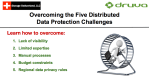
One of the biggest challenges facing IT today is how to effectively protect data distributed between offices and across clouds. Companies with remote and branch locations, and newly merged organizations are all at risk of losing their critical data or…
For most organizations, backup and recovery is their most fragile process. Any change in the environment can cause the entire data protection house of cards to come crashing down around the well-intentioned IT professionals that run it. The problem is…

The industry has been espousing the merits of object storage for years now and cloud providers have been quick to adopt the technology. The enterprise, on the other hand, is more cautious, partly because the object storage alternative, Network Attached…
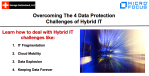
Organizations want to become data-driven. To achieve this goal they are leveraging modern applications and modern infrastructures. The combination creates a Hybrid IT environment where data and applications can be on-premises and in the cloud. While Hybrid IT does allow…

For the Software Defined Data Center (SDDC) to deliver its full potential it is necessary to bring together resources like CPUs, GPUs, storage and network into a dynamic pool from which applications or services pull those resources as needed. Then…
With the broad adoption of server virtualization by data centers, it became apparent that protection of the new environment was very inadequate. Organizations faced in-guest protection or very fragile off-host architectures. As adoption continued, VMware and others made significant strides…

Software Defined Storage (SDS) was supposed to revolutionize storage, freeing IT from the chains of vendor lock-in, allowing them to build more cost effective scalable architectures. The first generation of SDS solutions, for the most part emulated the dedicated storage…
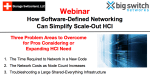
Hyperconverged Infrastructures (HCI) offer management simplicity and provisioning agility to data centers undergoing digital transformation. When applications need more compute or storage resources, IT can “simply add a node” to an existing HCI cluster. But as the HCI environment scales…


 StorageSwiss.com - The Home of Storage Switzerland