

The 3-2-1 rule states that an organization should have three copies of data on two different types of media, with IT storing one copy off-site and preferably offline. Traditionally, organizations count on the backup process to meet the 3-2-1 rule’s…
The 3-2-1 rule states that an organization should have three copies of data on two different types of media, with IT storing one copy off-site and preferably offline. Traditionally, organizations count on the backup process to meet the 3-2-1 rule’s…
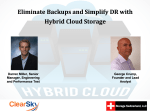
The cloud should be a valuable ally in helping organizations eliminate backup infrastructure and increase their disaster recovery (DR) confidence. The reality is that current cloud backup and DR solutions fall short because they don’t fully exploit cloud resources. Most…

Toward the end of May, companies worldwide sent out emails informing customers of updates to their data privacy policies. These emails were in response to something called GDPR, which stands for the General Data Protection Regulation. It is a European…

Join Storage Switzerland Founder and Lead Analyst George Crump on our next series of live events; Backup is Dead – How to Modernize Data Protection and Data Management. George is one of the top rated speakers in the IT industry…

Organizations are creating and capturing more data than ever. Creating and capturing data though is just the starting point. Organizations need to leverage that data to drive better outcomes. Most organizations use brute force to manage this data, which is…
Recent surveys indicate that over 50% of organizations feel their data protection processes can’t be counted on for consistent, rapid recovery of data. Instead of trying to band-aid the problem, IT needs to develop a holistic strategy. In this “Steak…

It seems like every couple of weeks there is an announcement of another exposed Amazon S3 bucket. Recently a branch of the military, the United States Army Intelligence and Security Command (INSCOM), was caught by security firm Upguard with a…

Object storage is an excellent secondary tier of storage. It can drive down the cost of storage, improve the quality of data retention and ensure that data is safe in the event of a disaster. Unlike other forms of storage,…
All-flash arrays are the performance sledgehammer, often obliterating the storage performance problem organizations hoped to resolve when buying them. The challenge is as the organization adds additional workloads to the array, its low latency exposes other bottlenecks in the environment…

Data protection is made of three components; the software that identifies and copies the data needing protection, the hardware that will store the protected copy and the IT professionals that drive the process. When two of these components are combined,…


