

A question that came up on our on demand webinar “Next Question: How to protect Office 365” was “Can’t I just use the Deleted Items Folder?” The deleted items folder does help prevent some data loss. Microsoft Office 365 allows…
A question that came up on our on demand webinar “Next Question: How to protect Office 365” was “Can’t I just use the Deleted Items Folder?” The deleted items folder does help prevent some data loss. Microsoft Office 365 allows…

The cloud holds much promise for data protection, but support for the cloud varies depending on the solution. Traditional backup applications and appliances have, at best, rudimentary support for the cloud. They may only mirror the on-premises copy of data…

When an organization moves Artificial Intelligence (AI) and Deep Learning (DL) projects from the test and design phase to production, the responsibility for maintaining that project often lands in IT’s lap. IT then has to put together an architecture that…
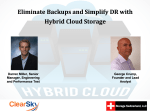
The cloud should be a valuable ally in helping organizations eliminate backup infrastructure and increase their disaster recovery (DR) confidence. The reality is that current cloud backup and DR solutions fall short because they don’t fully exploit cloud resources. Most…
Many cloud migration and cloud first strategies fail to live up to expectations. The problem is organizations spend too much time on micro issues like product selection and not enough time on big picture items like the cloud strategy’s foundation.…

Public cloud providers all have at least three tiers of storage to offer their customers. They often offer a high-performance tier for cloud native applications, a tier designed for active but not as performance sensitive, unstructured data sets and a…

In most data centers, Tier 1 production storage has evolved from high-end hard disk-based systems to hybrid systems supported by flash to all-flash arrays. These Tier 1 systems are also typically well equipped with enterprise features like snapshots, replication and…

For decades, an organization bought its network switching products from a single vendor such as Cisco. In most cases, that organization’s data center became 100% dedicated to that networking vendor and it was almost impossible for another vendor to gain…
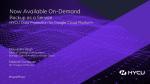
A common question from organizations with cloud native applications is do they need to back those applications up? The cloud, after all provides plenty of redundancy and all major cloud providers have multiple data centers at their disposal. Most providers…

Next generation all-flash arrays (AFA) face a serious problem; they will provide more capacity than most data centers need. While too much capacity doesn’t sound like a problem it will be because organizations are still going to pay for it.…


