

Storage remains the thorn in the side of IT as it attempts to meet the expectations of the organization. According to a study commissioned by SUSE, 70% of IT departments say their current storage strategies are not keeping up with…
Storage remains the thorn in the side of IT as it attempts to meet the expectations of the organization. According to a study commissioned by SUSE, 70% of IT departments say their current storage strategies are not keeping up with…

A hyperscale data center may have hundreds of instances of multiple applications. At any point in time one of these instances may peak and demand a much higher than normal amount of CPU and storage IO, starving other instances and…
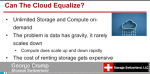
Access to almost limitless, on-demand compute and storage means public cloud providers like Amazon, Google and Azure should be a factor in the strategy of almost any sized enterprise. Most experts recommend a hybrid approach, but the problem is data…

Eighty percent of an organization’s data is active and 15% of it really matters. Archiving is the management of the 80%. Data preservation is the management 15%. While organizations often need help identifying the 80% of data that is not…

While cloud storage has plenty of benefits, its biggest weakness, latency, keeps it from receiving full adoption. The solution may be found in a group of businesses that many think cloud storage replaces, storage resellers. If they can solve the…

There is a capacity and performance paradox to unstructured data that wastes IT budget and resources as IT tries to find the perfect solution. In terms of capacity, the organization has more and more data to store each year, and…
Managed Service Providers (MSP) are under pressure to add more services to their portfolios. Most started with backup and now are looking to add services like application hosting and virtual desktop as a service. Not only are these services complicated…

Typically IT has to perform a data migration from an old storage system to a new one every few years. The old system has either come off of maintenance, is out of capacity, or can’t deliver the performance the organization…

Most organizations have a subset of data they need to preserve. Preservation is different than archiving. Preservation means that the data can’t be changed, must always be readable and the organization needs to know who is accessing it. Often there…

Times have changed. Data centers must refresh storage more frequently than ever. The organization wants faster application response to more sophisticated queries across more users. Or it wants to start a totally new endeavor, like better decision making driven by…


