
Disaster Recovery as a Service (DRaaS) is potentially one of the best use cases for cloud resources. DR sites owned by the organization are expensive to set up and maintain as well as challenging to get to when a disaster…
Disaster Recovery as a Service (DRaaS) is potentially one of the best use cases for cloud resources. DR sites owned by the organization are expensive to set up and maintain as well as challenging to get to when a disaster…
Most organizations are not satisfied with their ability to backup, recovery and correctly retain unstructured data. The combination of unprecedented growth and increased scrutiny caused by regulations like GDPR and CCPA is pushing organizations to the brink. It’s time to…

Before NVMe, most flash systems were either serial attached SCSI (SAS) or Serial Advanced Technology Attachment (SATA) based. In all-flash arrays, SAS was the preferred protocol because of its higher bandwidth and ability to support multi-port connections. NVMe is the…
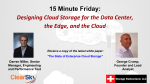
When most vendors talk about solving an organization’s storage problems, they typically are talking about solving their challenges in one of three categories: the data center, the edge or the cloud. The reality is that even within these three categories,…

The use of Open Networking promises operational value, data center flexibility and a reduction in the cost of network infrastructure. Next Generation SDN (Software Defined Networking) promises automation, increased agility and a reduction in operational costs of data center networking…

One of the initial appeals of hyper-converged infrastructure is its use of commodity hardware which in theory lowers costs. The reality is that most commodity hardware isn’t able to fully utilize high-performance CPUs, internal connectivity and high-performance NVMe media, which…
Organizations look to change data protection software for a variety of reasons. Two of the most popular involve the cloud; cloud backup storage and disaster recovery as a service (DRaaS). There are many problems though with switching software and the…

In my last blog “The Problem with Gold-Only Data Protection Service Levels” we looked at how to design a gold service level for data protection and what the pros and cons of that approach are. In this entry, we look…

A recent report from Igneous, “The State of Unstructured Management 2018,” indicates that most IT professionals are not satisfied with their ability to meet organizational expectations about the backup, recovery, and retention of their unstructured data sets. The value that…

Most storage consolidation strategies fail because they attempt to consolidate to a single piece of storage hardware. To successfully consolidate storage, IT professionals need to look at consolidation strategies that worked. Server consolidation was VMware’s first use case. It was…


