

When it comes to managing unstructured data the data center has problems. The legacy network attached storage (NAS) systems that it uses to store this data are no longer keeping pace with the demands of the modern data center. As…
When it comes to managing unstructured data the data center has problems. The legacy network attached storage (NAS) systems that it uses to store this data are no longer keeping pace with the demands of the modern data center. As…

The traditional three-tier architecture – compute, networking and storage – has served IT well for decades. It was born in an era where the availability of these resources were in short supply and the cost to acquire them was very…
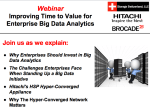
Embracing and taking full advantage of big data analytics can provide tremendous returns to organizations willing to invest. The problem is that while we understand the value of analytics, how to get started is confusing. Most big data analytic projects…

Network Attached Storage (NAS) systems and file servers were the foundation of collaboration in the 90’s. These storage systems primarily served the needs of users that needed to share files for projects. In the 2000’s NAS systems found a lease…
Artisan Infrastructure Briefing Note Artisan Infrastructure is a leading cloud infrastructure, management, and business continuity solutions provider. Its solutions enable cloud and hosting providers to migrate, manage and deliver continuously available cloud applications for their customers and suppliers. Artisan provides…

Organizations embark on Virtual Desktop Infrastructure (VDI) projects to drive down end-user operational costs and to enhance infrastructure security. These projects often evaluate well. During “test mode” there are a limited number of users, making it easy to meet their…

Big Data Analytics uses distributed computing architectures, on platforms like Hadoop, to run large processing jobs on even larger datasets. Since data being processed in a Hadoop environment usually needs to be resident on the compute nodes themselves, this can…

IBM and Catalogic Team Up To Help Transform IT The modern data center has two modes; Reliable IT and Agile IT. Reliable IT represents core mission critical applications that drive the internal operations of the company. As its name suggests,…

Enterprise Applications and Dynamic Business Workloads Demand Faster and Faster Response Times Applications are driving the enterprise, whether it is a relatively simple application used by millions of customers or a complex, scalable database that drives an organization’s back end.…

Cloud and traditional data centers face two competing challenges. The first is meeting the ever-increasing demand for performance. Flash, in its various forms, can meet these requirements. On the other end of the spectrum is meeting the demands of storing all the data we create. The answer to these environments has not been as simple. Flash, by itself, is not the answer due to its higher cost per GB. SMR hard drives improve the ability to meet capacity demands, but have limited random write performance. By coupling SMR drives with flash, these two technologies can create a very practical solution which enables adoption without significant change to the existing infrastructure. In this article we will discuss how SMR drives work and how they can be coupled with flash to meet both of these challenges


