
The Infrastructure Modernization Problem is rooted in ecosystem overload—years of fragmented, overly complex, and vendor-dependent IT infrastructure. IT managers today face challenges including disruptive virtualization vendor acquisitions, escalating public cloud costs, demanding AI infrastructure requirements, and persistent skills shortages. While these challenges may appear distinct, they all stem from the cumulative complexity caused by continuously adding multiple specialized components and niche vendors into existing ecosystems.
Historically, IT infrastructure evolved incrementally, with individual departments frequently adding specialized hardware, software, and services to meet immediate needs. Over time, this incremental growth created sprawling technology stacks, each with its own management interfaces, update schedules, compatibility matrices, and vendor dependencies. Each new solution promised incremental improvements in functionality or performance but led to unforeseen consequences such as increased complexity, inflated operating costs, higher vulnerability to cyber threats, and more difficult troubleshooting scenarios.
Virtualization Vendor Disruption
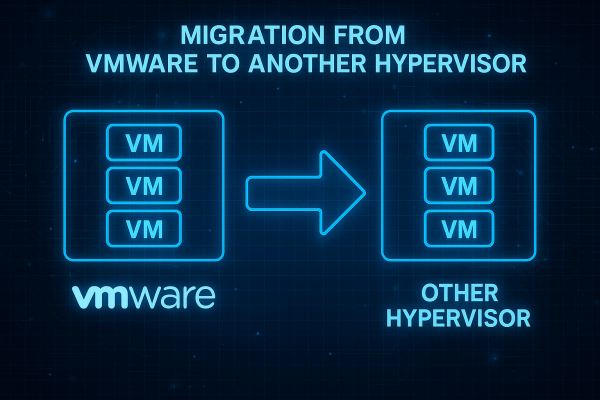
The virtualization market exemplifies this complexity. Major virtualization provider acquisitions, such as VMware’s, have created uncertainty, forcing IT managers to reconsider their vendor strategies. Licensing costs increase, and product roadmaps become unpredictable, yet switching virtualization platforms isn’t trivial due to deep integrations with existing hardware, storage solutions, and networking.
Moreover, traditional virtualization solutions lacked core capabilities such as comprehensive data protection, adequate storage management services, and robust disaster recovery. This gap drove organizations to rely on additional niche vendors, resulting in increased management overhead and integration complexities. Yet the virtualization vendors marveled at their eco-system, which was making things worse.
Escalating Public Cloud Costs
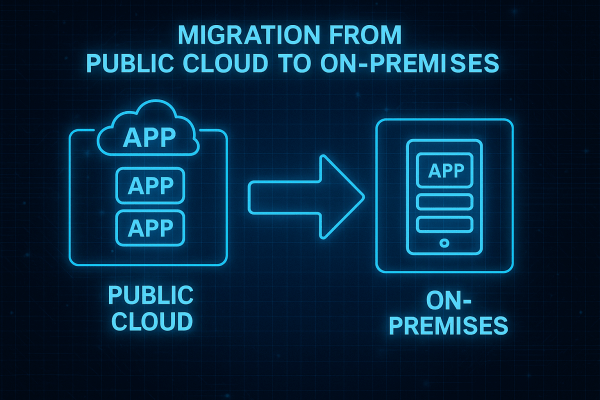
The initial appeal of public cloud—agility, scalability, and cost control—has given way to escalating and unpredictable expenses. Workloads are spread across multiple cloud providers, and the rise of “shadow IT” complicates cost management and security. Managing multi-cloud environments requires specialized skills and additional tools, which drive operational costs higher.
As with virtualization, cloud platforms lacked built-in data protection, advanced storage management, and comprehensive disaster recovery solutions. Organizations are forced to integrate multiple third-party solutions, further complicating their infrastructure ecosystem.
AI Infrastructure Demands
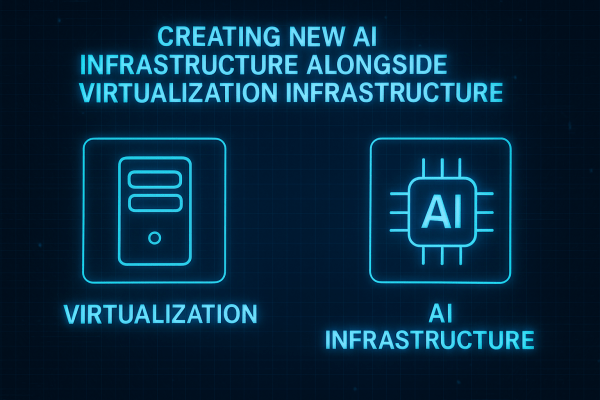
The demand for Private Enterprise AI has sharply intensified infrastructure demands. Dedicated compute resources, GPU accelerators, specialized storage solutions, and high-speed networking are essential. Traditional fragmented IT ecosystems struggle to rapidly provision and integrate these components, creating additional infrastructure silos that compound complexity.
AI-specific solutions also lack integrated data protection, scalable storage management, and disaster recovery capabilities, requiring organizations to add yet another set of niche solutions and vendors, exacerbating ecosystem overload.
Persistent Skills Shortages
Aggravating these technical challenges is the chronic shortage of qualified IT personnel. The increased complexity of infrastructure necessitates retaining experts skilled in multiple specialized technologies, creating staffing challenges. Complexity itself discourages new talent, leading to operational bottlenecks and increased risk.
The False Promise of Specialized Solutions
Many organizations respond to each of these distinct challenges by adopting specialized infrastructure solutions targeted at virtualization, cloud management, AI, or security individually. Each solution brings with it a dedicated ecosystem of hardware, software, management tools, vendors, and integration points. Rather than reducing complexity, this fragmented approach exponentially increases it—each new ecosystem further strangles IT’s ability to deliver services.
Over time, the layers of specialized solutions become so dense and interdependent that managing, securing, and scaling infrastructure becomes nearly impossible. Without directly addressing this growing complexity, IT operations face the risk of collapsing under their own weight.
The Need for a New Infrastructure Paradigm
These interconnected symptoms highlight the necessity for a modern infrastructure paradigm—one that consolidates compute, storage, networking, security, and data protection into a single, coherent software-defined platform. These solutions reduce reliance on proprietary hardware, simplify management, and deliver automated deployments, integrated security, comprehensive data protection, and robust disaster recovery.
Adopting a unified infrastructure model enables IT teams to reduce operational overhead, enhance their security posture, and quickly adapt to evolving business needs.
VergeIO: A Unified, Software-Defined Example
VergeIO exemplifies addressing the infrastructure modernization problem through its unified, software-defined solution, VergeOS. The platform consolidates virtualization, storage, networking, AI Pipelining, data protection, and disaster recovery capabilities into a single, coherent software-defined environment, unified into a single, secure codebase.
This approach dramatically simplifies operations, eliminates dependencies on multiple niche vendors, and reduces complexity. By integrating these core capabilities, VergeOS enables IT teams to quickly adapt to changing business needs, enhance their security posture, and reduce operational overhead. VergeIO showcases the potential benefits of transitioning from fragmented ecosystems to a streamlined, integrated infrastructure solution.
Moving Forward: Simplifying IT Infrastructure
Resolving The Infrastructure Modernization Problem isn’t about adding another specialized solution. Instead, it’s about fundamentally rethinking and consolidating infrastructure. Transitioning to an integrated, software-defined approach addresses ecosystem overload directly, establishing a sustainable, secure, and efficient operational foundation.

George Crump is the Chief Marketing Officer at VergeIO, the leader in Ultraconverged Infrastructure. Prior to VergeIO he was Chief Product Strategist at StorONE. Before assuming roles with innovative technology vendors, George spent almost 14 years as the founder and lead analyst at Storage Switzerland. In his spare time, he continues to write blogs on Storage Switzerland to educate IT professionals on all aspects of data center storage. He is the primary contributor to Storage Switzerland and is a heavily sought-after public speaker. With over 30 years of experience designing storage solutions for data centers across the US, he has seen the birth of such technologies as RAID, NAS, SAN, Virtualization, Cloud, and Enterprise Flash. Before founding Storage Switzerland, he was CTO at one of the nation's largest storage integrators, where he was in charge of technology testing, integration, and product selection.
 kolbiniemeyer2000 says:


 StorageSwiss.com - The Home of Storage Switzerland